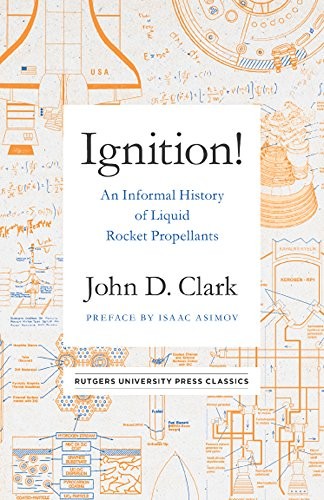
Ignition!
An Informal History of Liquid Rocket Propellants
Ignition! is the only insider account of the Cold War liquid propellant race. It is also, improbably, one of the funniest science books ever written. John D. Clark spent over twenty years as Chief Chemist at the Naval Air Rocket Test Station in Dover, New Jersey, mixing the most dangerous chemicals ever synthesized, surviving the explosions, and keeping notes. His literary background — friendships with Isaac Asimov, L. Sprague de Camp, and the science fiction writers of New York — gave him the rare ability to write about hypergolic fuels and nitric acid with the pacing of a thriller and the voice of a man who has seen too much and decided the only sane response is dark humor.
Asimov, who wrote the foreword, put it simply:
"Now it is clear that anyone working with rocket fuels is outstandingly mad. I don't mean garden-variety crazy or merely raving lunatic. I mean a record-shattering exponent of far-out insanity."
— Isaac Asimov, from the foreword
He wasn't exaggerating.
The Chemist
John Drury Clark (1907–1988) was born in Fairbanks, Alaska, earned his B.S. from Caltech — where his college roommate was science fiction writer L. Sprague de Camp — and completed his Ph.D. at Stanford in 1934. From 1949 to 1970 he served as Chief Chemist at NARTS, directing the development of storable high-energy liquid propellants for the Navy. He put the "I" in IRFNA — Inhibited Red Fuming Nitric Acid — by discovering how to store the ferociously corrosive oxidizer in economical aluminum containers.
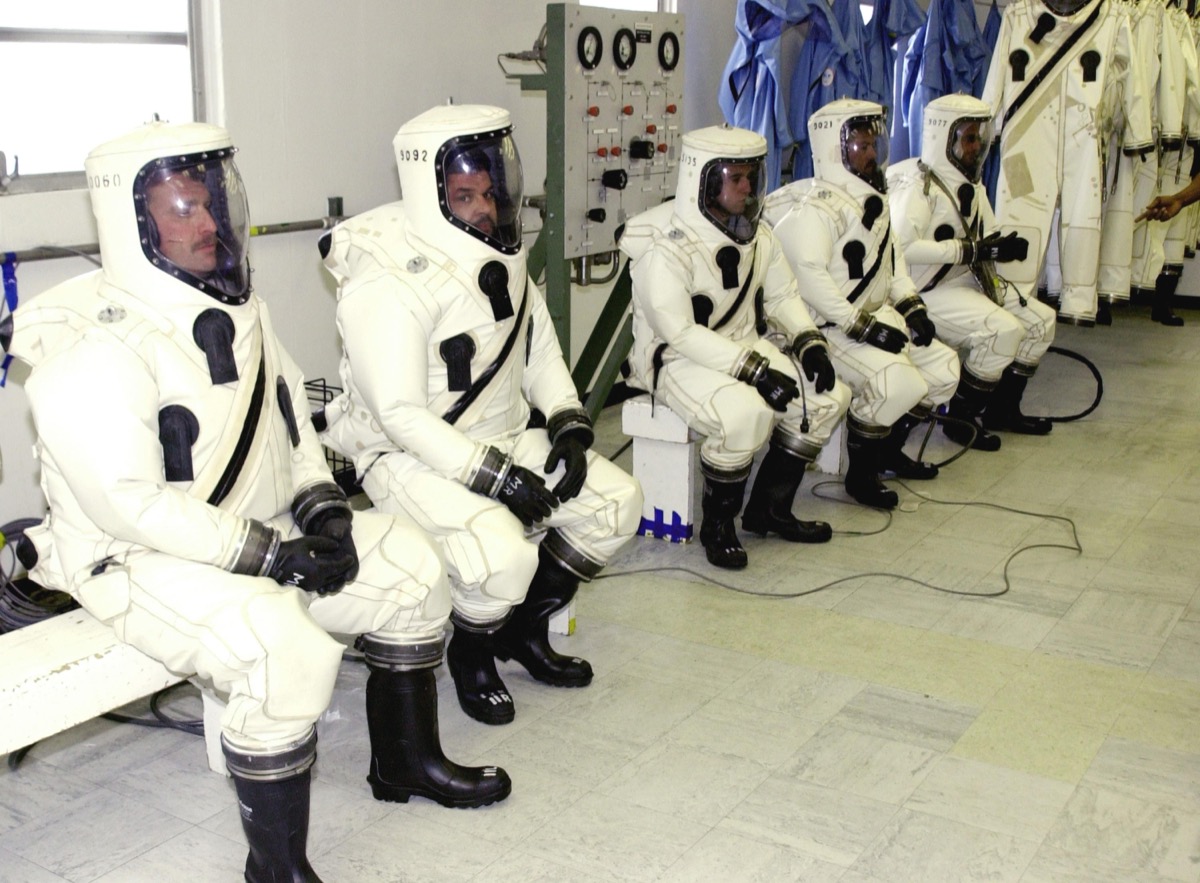
Under Clark's leadership, NARTS maintained seventeen years without a single lost-time industrial accident — while working daily with chemicals that could burn through concrete, ignite sand, and decompose explosively on contact with almost anything. That record is itself a kind of masterpiece, given what they were handling.
Clark was also deeply embedded in the science fiction world. He wrote two stories for Astounding Stories in 1937, including "Minus Planet" — the first science fiction story to deal with antimatter. He was a founding member of the Trap Door Spiders, a literary club that became the basis for Asimov's Black Widowers mystery series. Clark himself was fictionalized as the character James Drake. The man testing rocket fuels in New Jersey was the same man trading stories with the giants of American science fiction in Manhattan. It explains everything about the book's voice.
The Race
The Cold War propellant race involved roughly 200 U.S. researchers across competing military branches and contractors. The urgency was real and existential: storable propellants — ones that could sit in a missile silo for months without boiling off or corroding their tanks — were a strategic necessity. Cryogenic propellants like liquid oxygen gave better performance but couldn't be stored. The race to find storable combinations that were also hypergolic — self-igniting on contact, for instant launch capability — drove some of the most creative and dangerous chemistry of the twentieth century.
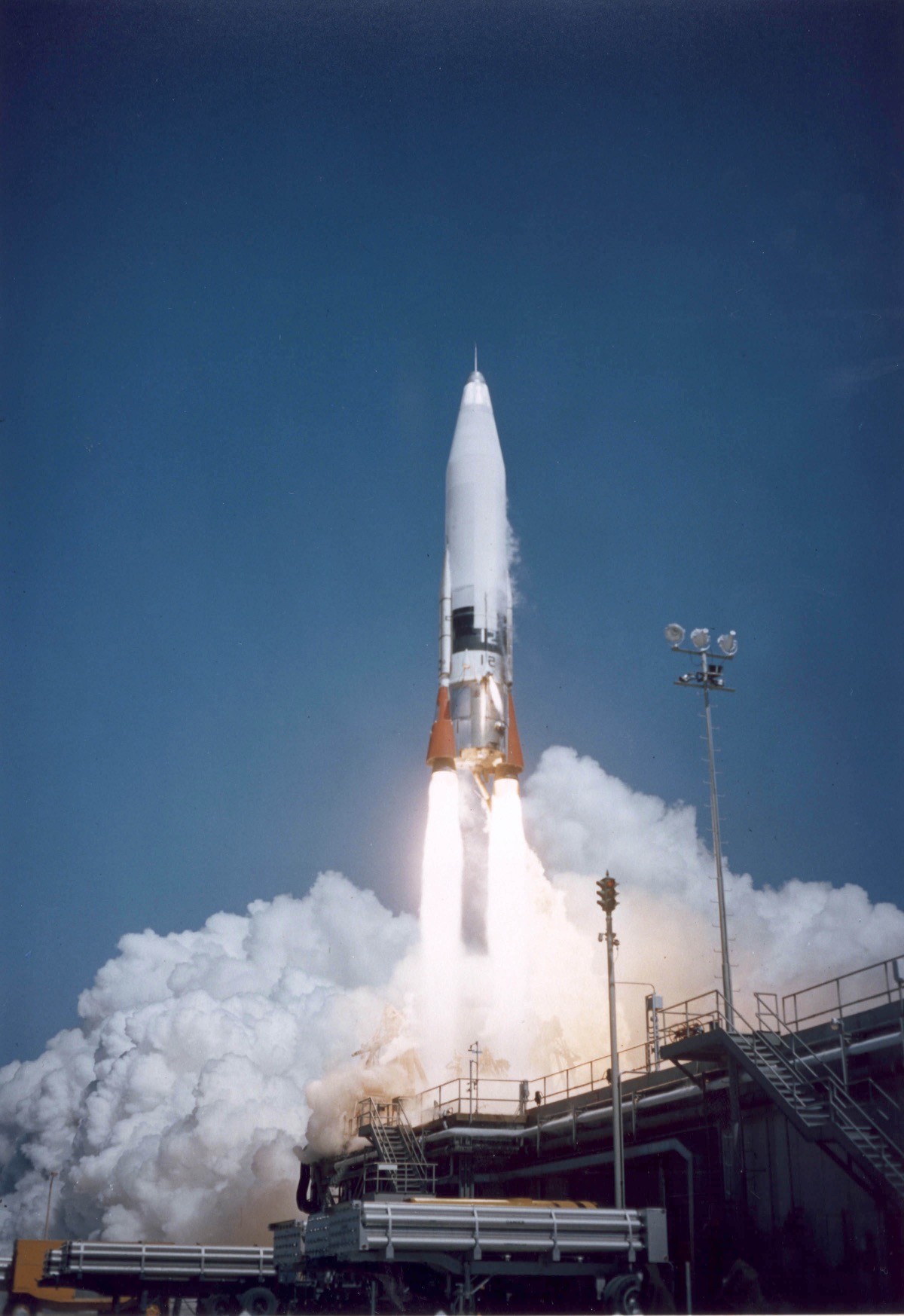
The first practical hypergolic combination — aniline and nitric acid — had one magnificent virtue: it worked. Everything else about it was terrible. Aniline was toxic, froze at −6°C, and was difficult to procure. What followed was decades of systematic chemistry to find something better, eventually converging on the hydrazine family (N2H4, UDMH, MMH) paired with nitrogen tetroxide. Clark covers the full taxonomy with the precision of a man who tested every one of them: cryogenic oxidizers, storable oxidizers, hypergolic fuels, boron hydrides, monopropellants, and exotics. The arc is always the same — promising theory, terrifying practice, eventual abandonment or reluctant adoption.
On red fuming nitric acid, the oxidizer Clark personally tamed:
"RFNA attacks skin and flesh with the avidity of a school of piranhas."
— On red fuming nitric acid
On hydrogen peroxide, which required absolute purity to avoid spontaneous decomposition:
"The cleanliness required was not merely surgical — it was levitical."
— On handling hydrogen peroxide
A recurring tension runs through the book: propellant chemists chasing theoretical performance versus engineers who needed chemicals that wouldn't destroy their hardware. The highest-performing propellants were often the least practical. Clark watched this cycle repeat for two decades — some exotic compound would look brilliant on paper, and then it would corrode the test stand, poison the technicians, or simply explode.
The Exotic Dead Ends
The best chapters are the ones about the roads not taken. Boron hydrides — the Pentagon's "zip fuels" — left sticky deposits clogging engine throats and cost $3 billion before being abandoned. Liquid fluorine offered superb performance but was nightmarishly toxic and corroded everything it touched. Monopropellants were essentially bombs with aspirations:
"A molecule with one reducing (fuel) end and one oxidizing end, separated by a pair of firmly crossed fingers, is an invitation to disaster."
— On monopropellants
And then there was chlorine trifluoride. Clark's description of ClF3 is the most quoted passage in the book, and possibly in the entire history of chemistry writing:
"It is, of course, extremely toxic, but that's the least of the problem. It is hypergolic with every known fuel, and so rapidly hypergolic that no ignition delay has ever been measured. It is also hypergolic with such things as cloth, wood, and test engineers, not to mention asbestos, sand, and water — with which it reacts explosively."
— On chlorine trifluoride (ClF3)
His most notorious anecdote: a one-ton steel cylinder of the stuff split open at a General Chemical facility in Shreveport, Louisiana, dumping 2,000 pounds onto the floor. It burned through twelve inches of concrete and thirty-six inches of gravel beneath. The building was evacuated. Clark's recommended equipment for dealing with metal-fluorine fires:
"If, however, this coat is melted or scrubbed off, the operator is confronted with the problem of coping with a metal-fluorine fire. For dealing with this situation, I have always recommended a good pair of running shoes."
— On metal-fluorine fires
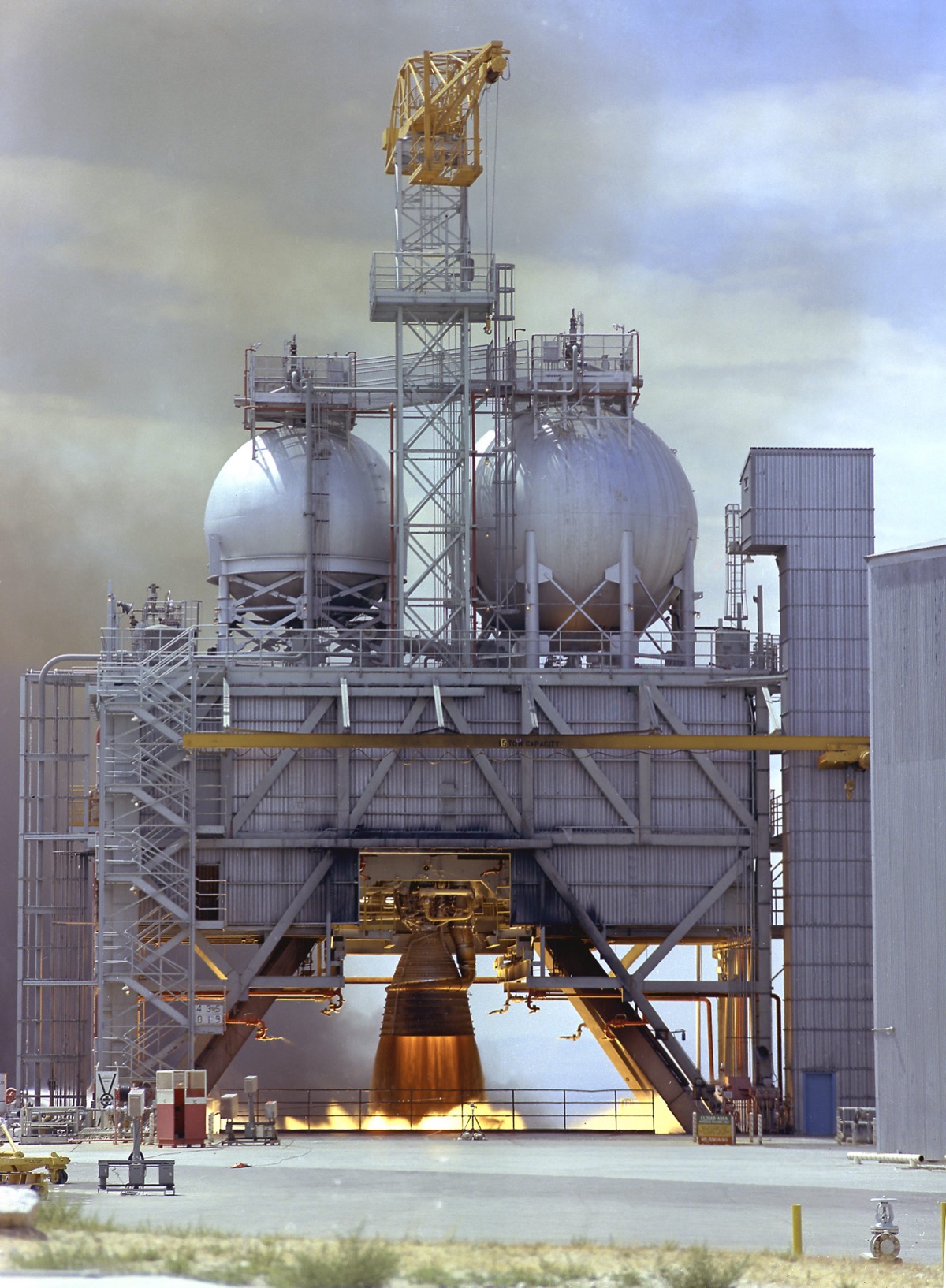
The Soviets, covered in Chapter 9 ("What Ivan Was Doing"), took a notably different approach. Rather than chasing exotic chemistry, they opted for larger rockets. It was, ironically, often the more practical strategy. Clark closes the book in 1972 believing that rocket propellant chemistry was essentially complete — every plausible chemical combination had been tested. The field was, in a sense, done.
He was largely right about the chemistry. What he couldn't have predicted was how completely the engineering context would change.
Where It All Went
Clark barely mentions methane in the book. It was known but unremarkable — a simple hydrocarbon with modest performance. Today, over 60% of new liquid rocket engine programs use methane/LOX. SpaceX's Raptor, Blue Origin's BE-4, Rocket Lab's Archimedes, and Relativity's Aeon R all burn methane. The reasons have nothing to do with ultimate specific impulse and everything to do with practical engineering: methane burns cleanly (99% less soot than RP-1), enabling engine reuse with minimal refurbishment. It boils at 111 K — close enough to LOX at 90 K to share a common tank bulkhead. And critically, methane can be synthesized on Mars from atmospheric CO2 via the Sabatier reaction.
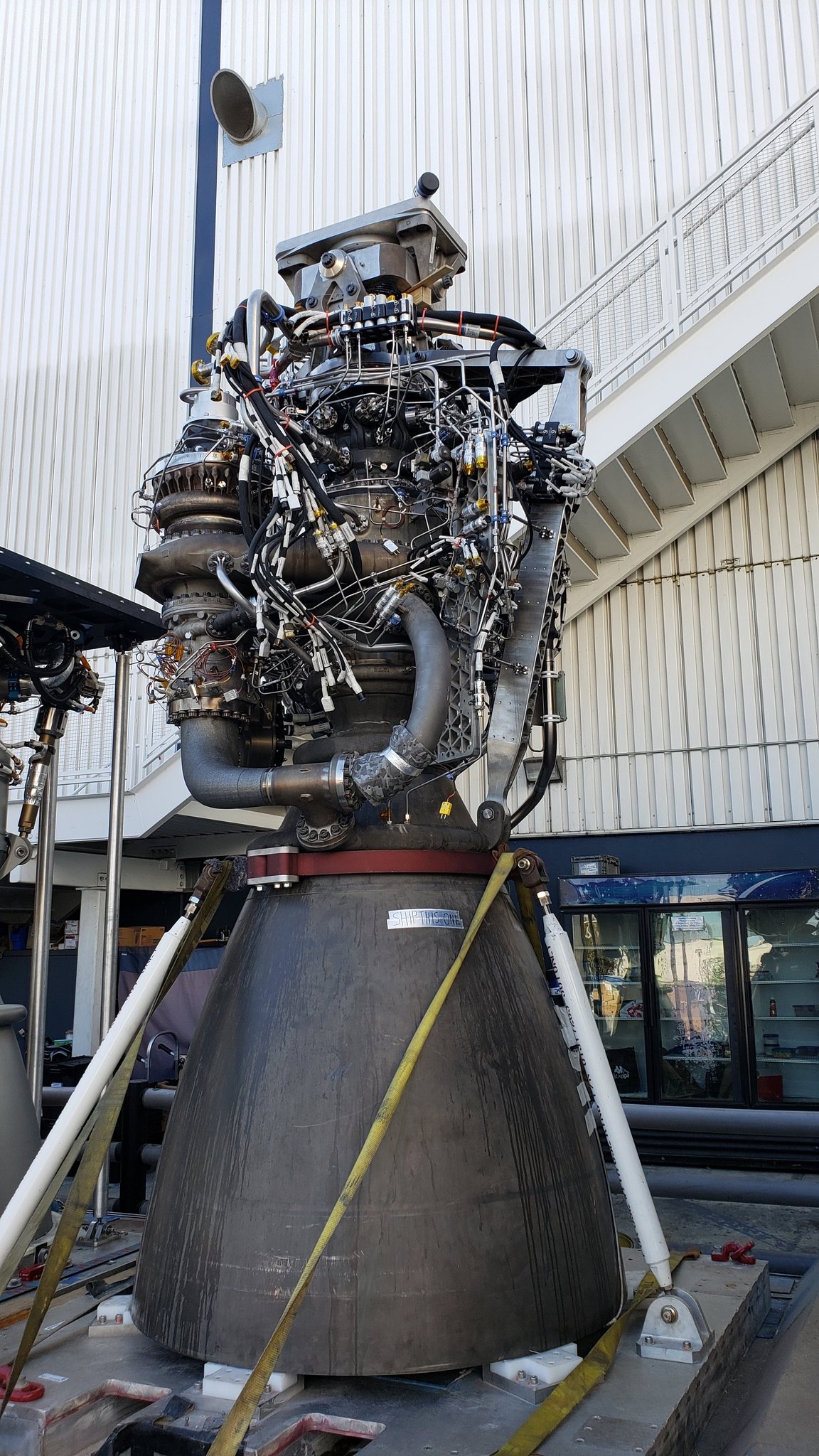
After all the exotics Clark and his colleagues tested — the fluorine oxidizers, the boron fuels, the interhalogens, the metallic slurries — the modern launch industry has consolidated around just a few liquid propellant families:
| Combination | Where It Flies | Role |
|---|---|---|
| RP-1 / LOX | Falcon 9, Electron, Firefly Alpha | Legacy workhorse, proven and cheap |
| CH4 / LOX | Starship, Vulcan, New Glenn, Neutron | Next-gen standard for reusable vehicles |
| LH2 / LOX | Centaur V, Ariane 6, New Glenn 2nd stage | Upper stages where max Isp matters |
| MMH / NTO | Dragon Draco thrusters, satellites | Hypergolics for in-space maneuvering |
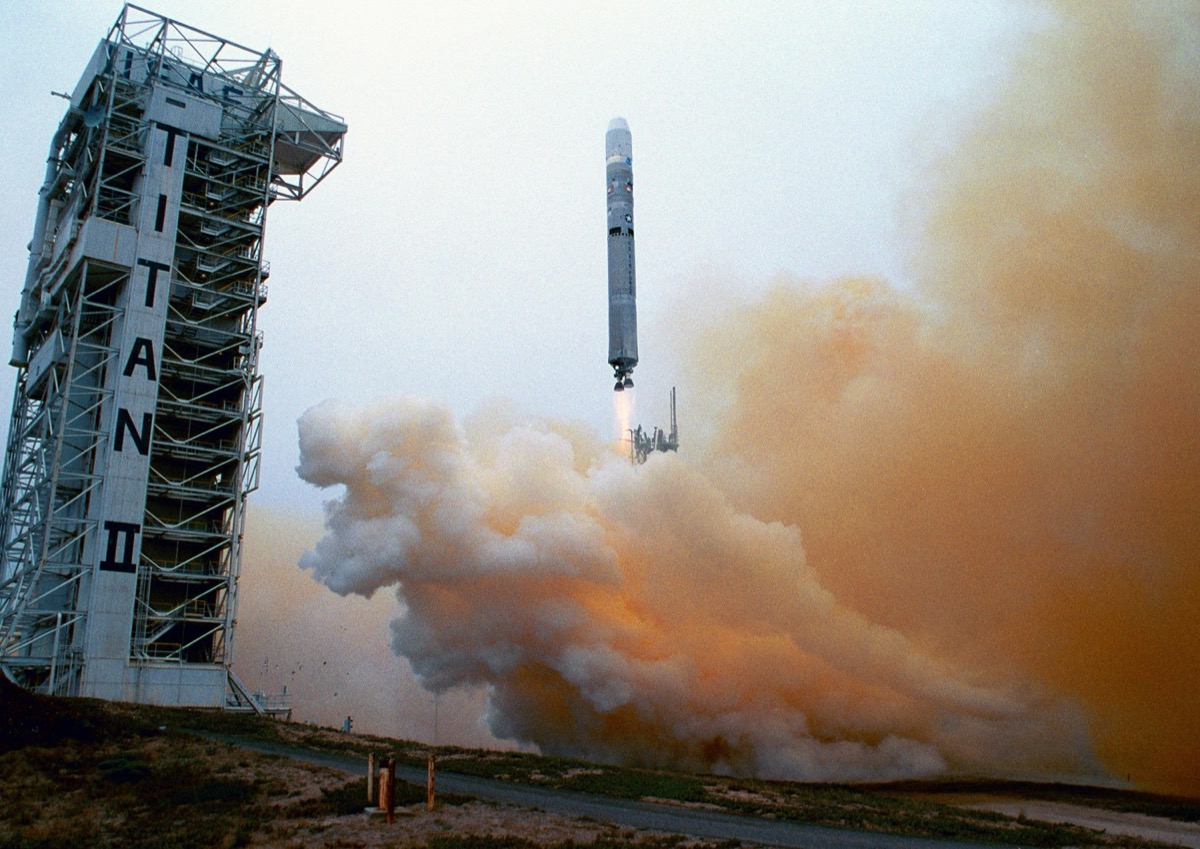
A global effort is now underway to replace Clark's "devil's venom" hypergolics. AF-M315E (ASCENT), a HAN-based ionic liquid monopropellant, offers approximately 50% greater density-specific impulse than hydrazine and was flight-tested aboard NASA's Green Propellant Infusion Mission in 2019. LMP-103S, an ADN-based energetic ionic liquid from Swedish company ECAPS, has flown on over 25 satellites. Even Clark's "bridesmaid" — high-concentration hydrogen peroxide — is making a comeback for small satellite thrusters, enabled by modern catalysts.
Perhaps the most striking development Clark couldn't have imagined: manufacturing propellant on another planet. NASA's MOXIE experiment aboard the Perseverance rover demonstrated oxygen extraction from Martian CO2, completing 16 runs at 98%+ purity before concluding in 2023. SpaceX's entire Starship architecture depends on this. The Sabatier reaction — CO2 + 4H2 → CH4 + 2H2O — converts Martian atmosphere into methane and oxygen. Without it, the mass requirements for a Mars round-trip are prohibitive.
Clark died in 1988. If he could see the modern propulsion landscape, the biggest surprise would be the simplest: after decades searching for exotic high-energy propellants, the winner was methane — the most boring hydrocarbon on his shelf. His recurring theme that "the theoretical propellant chemist is the natural enemy of the practical rocket engineer" found its ultimate validation. The cost bottleneck moved entirely from chemistry to engineering and manufacturing. Starship's full propellant load costs approximately $1 million to lift 100+ metric tons to LEO. The chemistry is solved. The engineering won.
The original 1972 edition went out of print and used copies climbed to $300–$1,400. Derek Lowe's "Things I Won't Work With" blog on Science/AAAS and Elon Musk's public recommendation helped drive a 2018 reprint by Rutgers University Press. It's now available in paperback, ebook, and audiobook.
Ignition! is one of those rare technical books that is genuinely impossible to put down. Clark writes about explosions, toxic fumes, and institutional politics with equal wit. But beyond the entertainment, the book preserves irreplaceable institutional knowledge — not just what worked, but why hundreds of alternatives were tried and rejected. For anyone working in propulsion, aerospace, or applied chemistry, it saves you from repeating expensive and dangerous mistakes. For everyone else, it is the best argument ever made that the history of chemistry is the history of human ambition running headfirst into the laws of thermodynamics.