The NASAcaster
The Idea
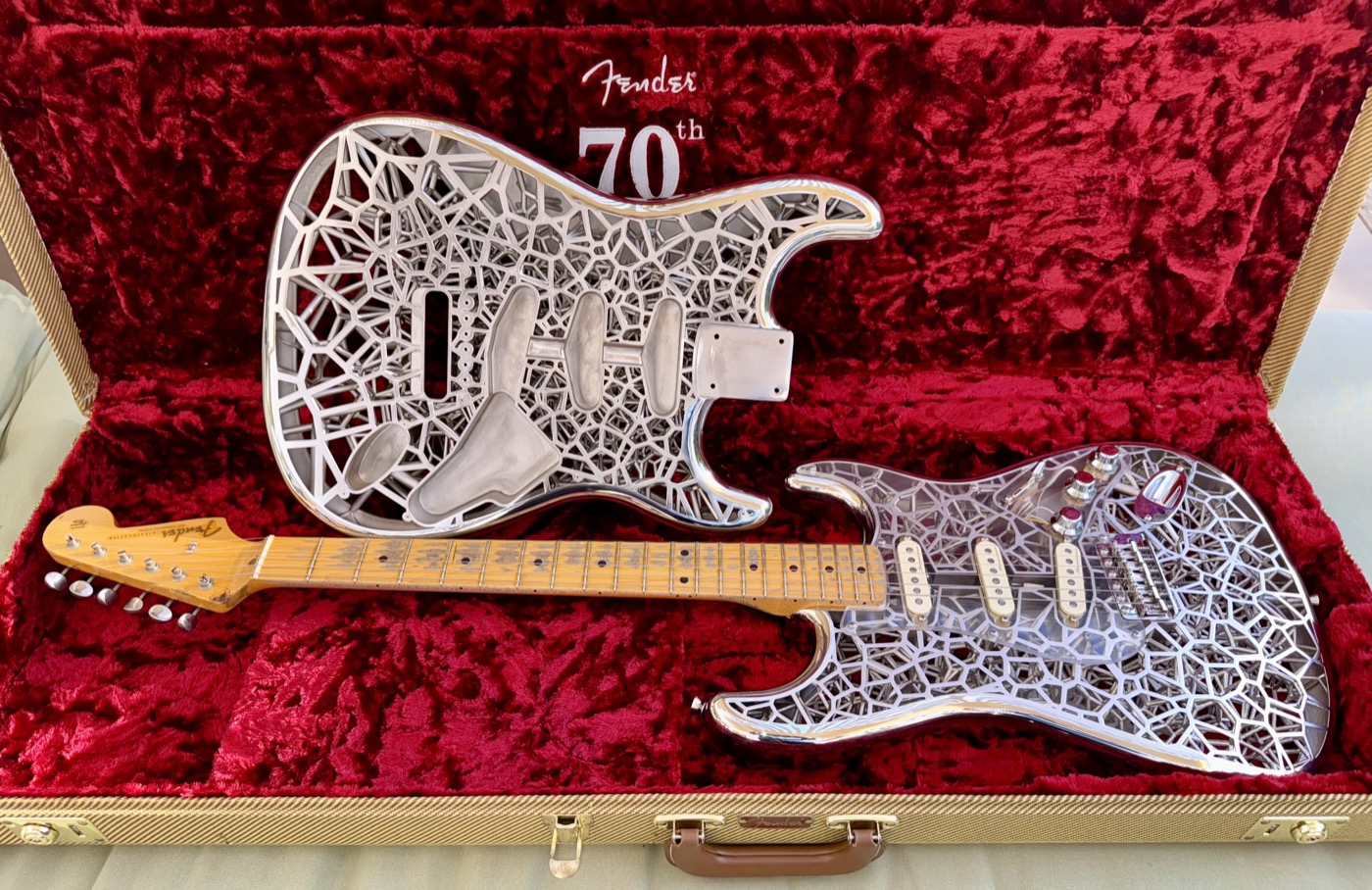
The question was simple: what happens when you apply topology optimization to an electric guitar body? Not to make it lighter for the sake of weight savings — but to expose the internal structure that emerges when you let an algorithm remove everything that isn’t load-bearing, acoustically relevant, or structurally necessary. The result would be a Stratocaster body that looks the way stress flows — an open lattice of interlocking cells, like bone, like coral, like the structure of a leaf.
The Fender Stratocaster was the obvious starting point. It is the most iconic solid-body guitar in history — Leo Fender’s 1954 design has defined the shape of an electric guitar for seventy years. Every guitarist alive has an opinion about it. That familiarity made it the perfect canvas: any structural intervention would be immediately legible. You wouldn’t need to explain what was different. You’d see it.
nTop: Computational Design
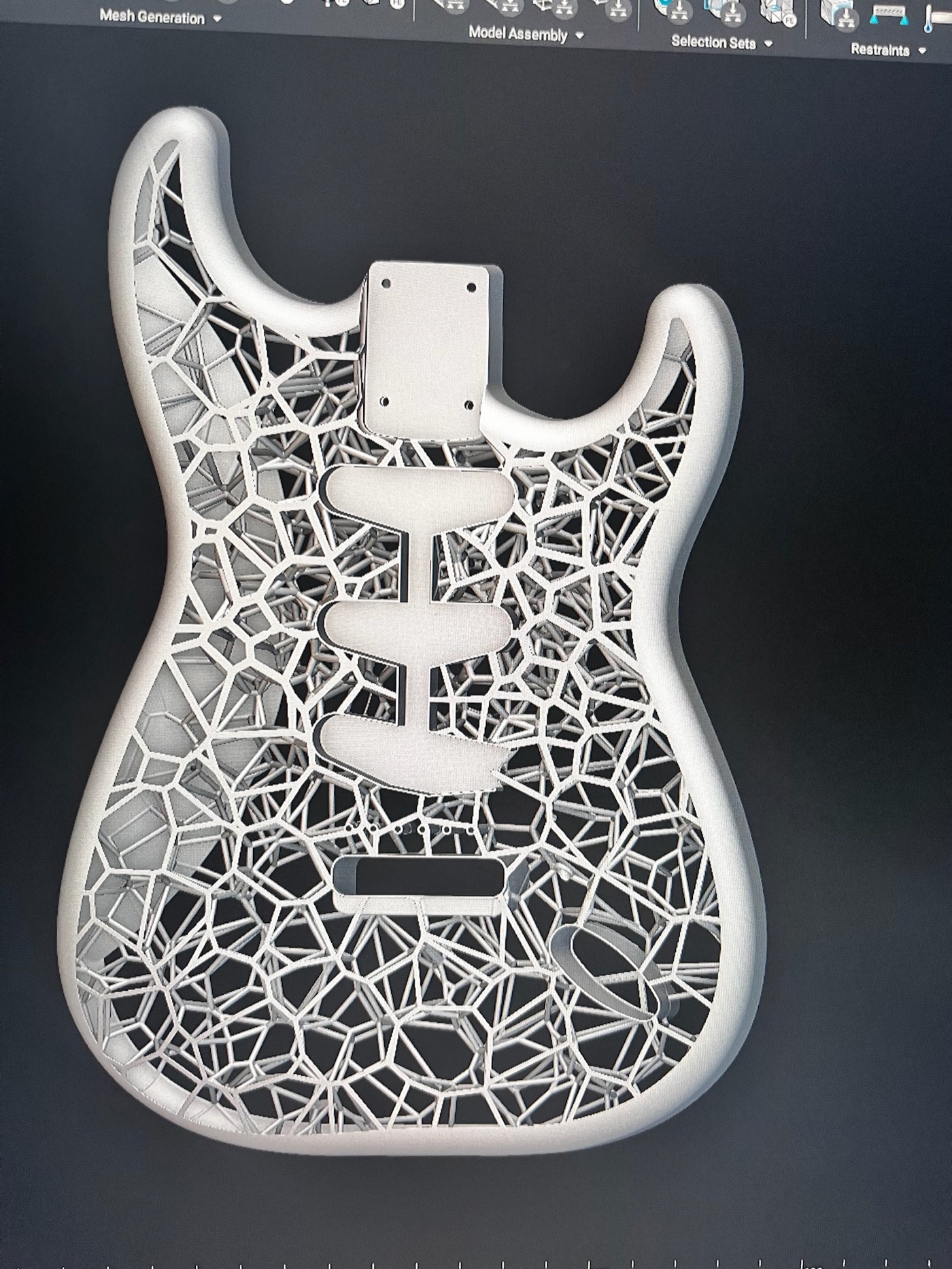
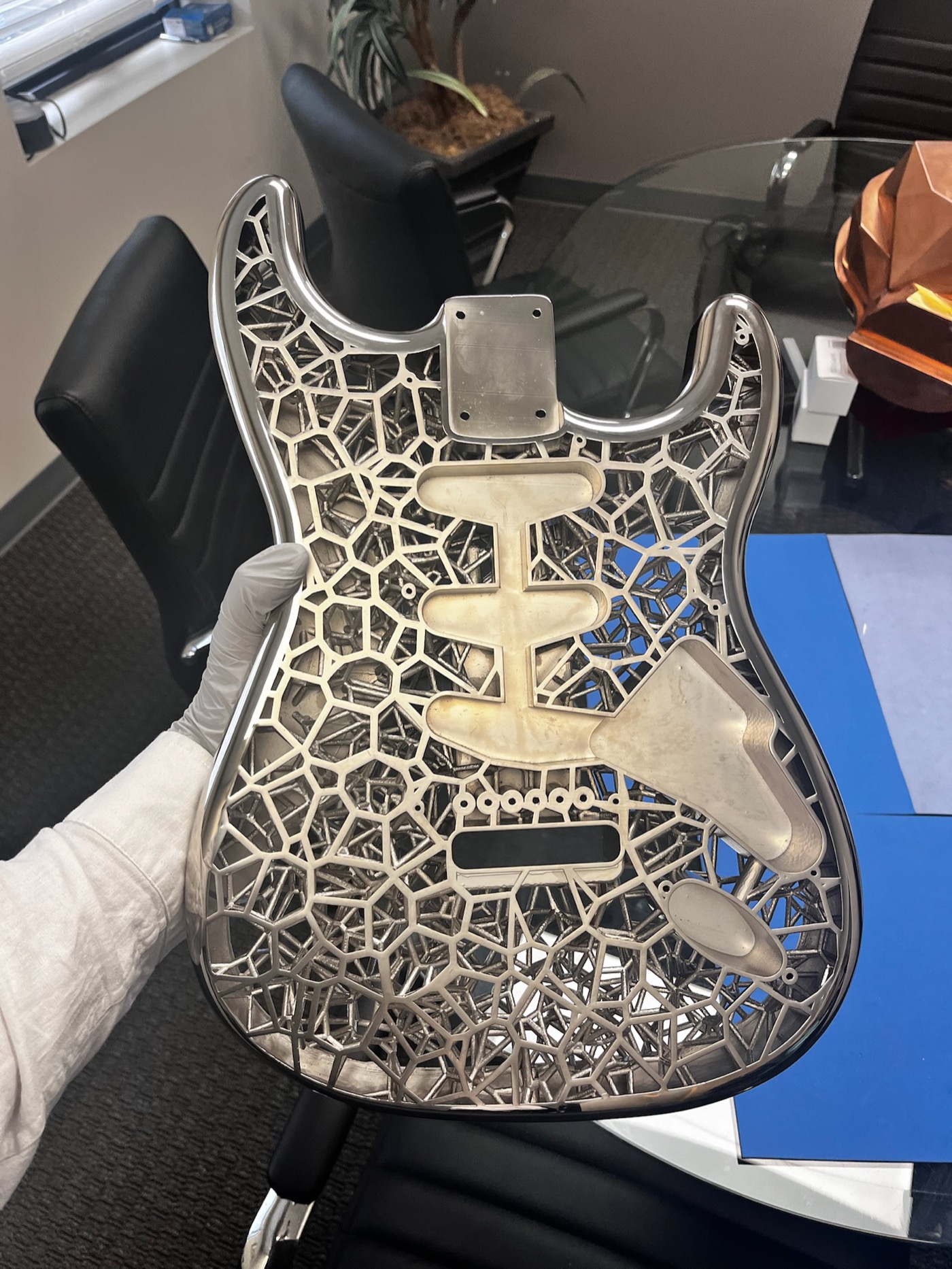
The body was designed in nTop (formerly nTopology), a computational engineering platform built for implicit modeling and lattice generation. Starting from a standard Stratocaster body CAD file, the solid volume was decomposed into a Voronoi tessellation — the same mathematical structure that appears in giraffe skin, dragonfly wings, soap bubbles, and cracked mud. The Voronoi algorithm partitions space into cells based on distance to a set of seed points, producing an organic, irregular lattice that is both visually striking and structurally efficient.
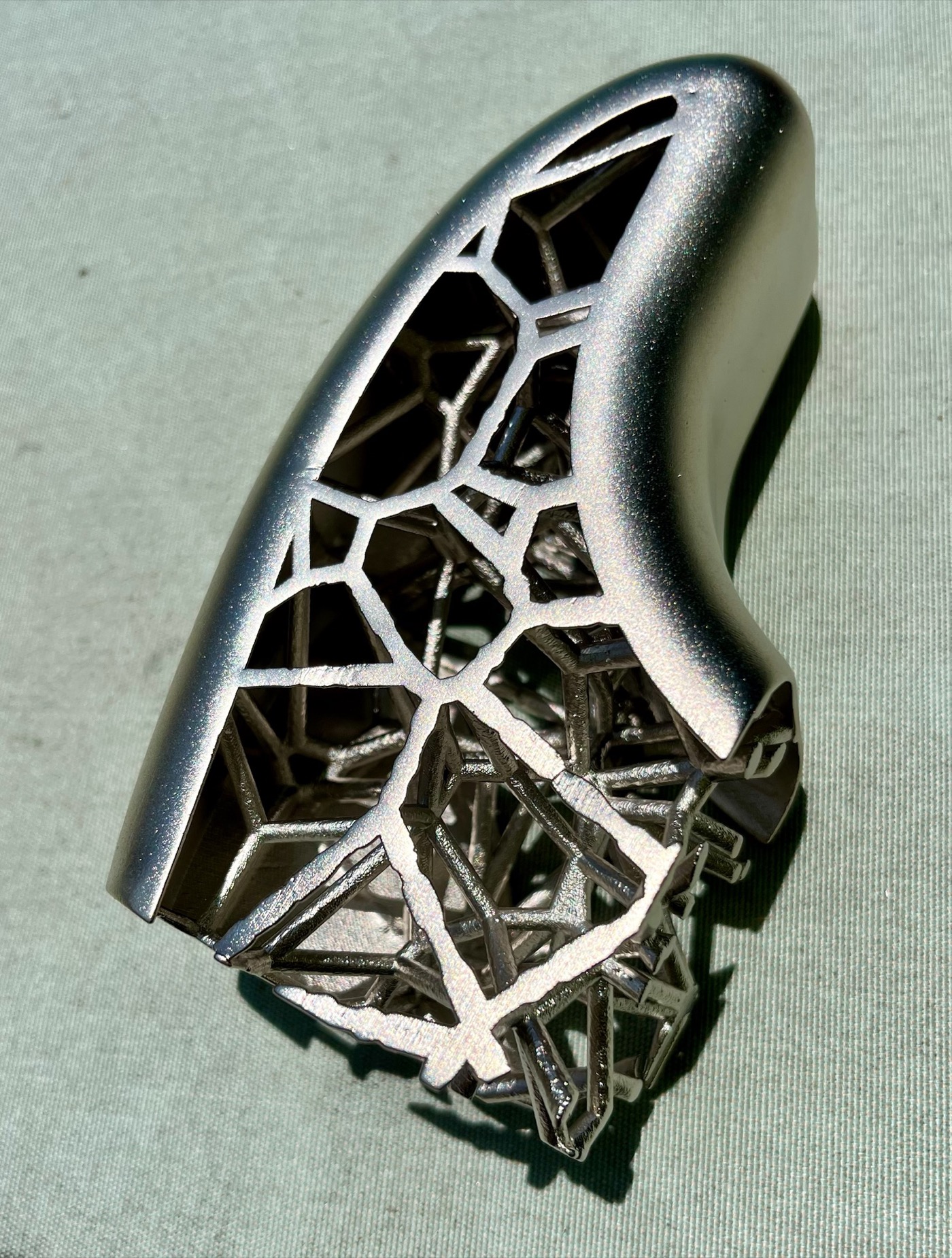
The key design constraints were straightforward: maintain the exact outer profile and contours of a Stratocaster body, preserve all mounting points (neck pocket, bridge, pickups, tremolo cavity, control cavity, jack plate), and ensure the lattice was thick enough to survive the electroplating process. The Voronoi cell walls were tuned to roughly 1.5–2mm thickness — thin enough to read as a lattice, thick enough to plate without bridging or filling the openings.
Resin: First Prints
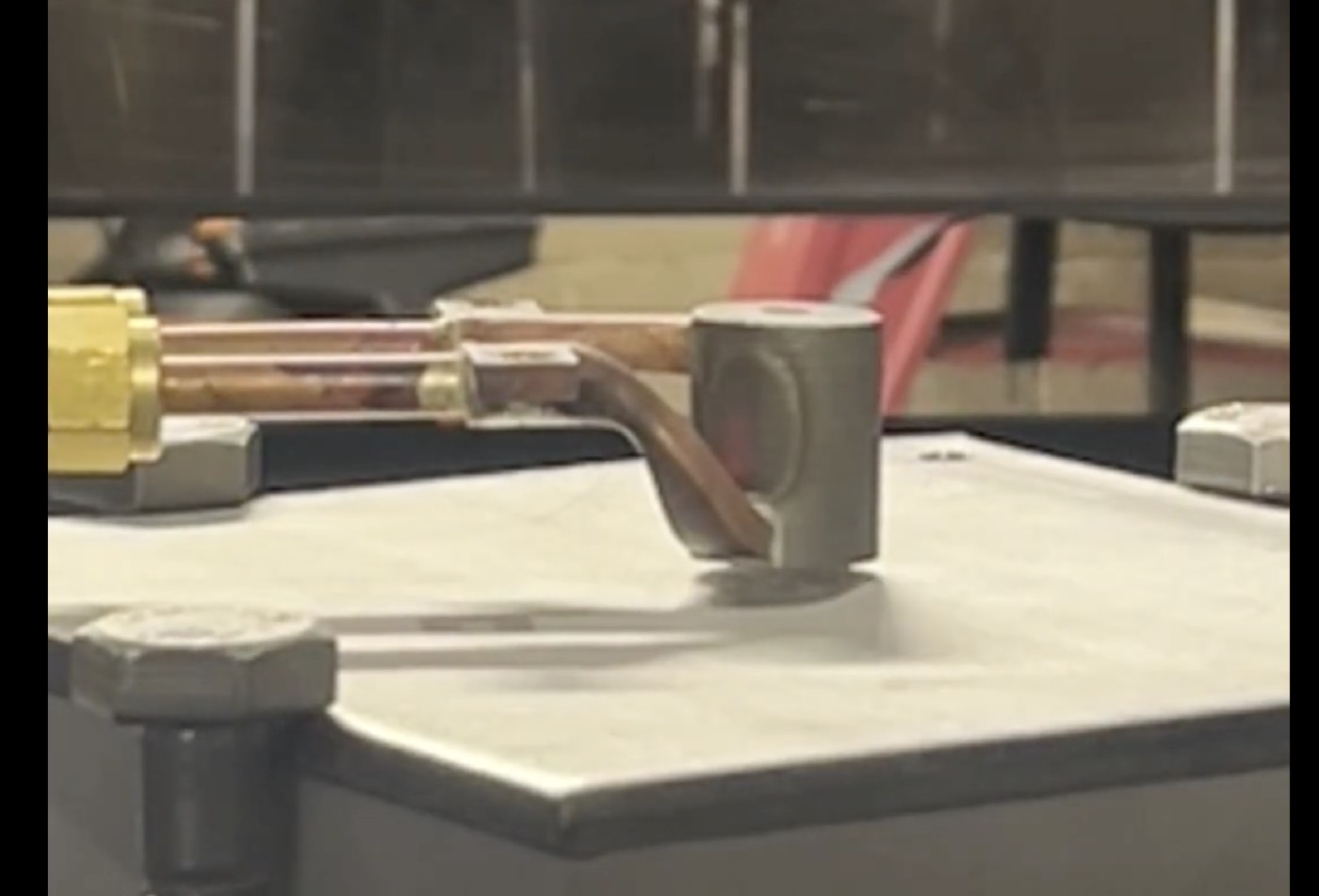
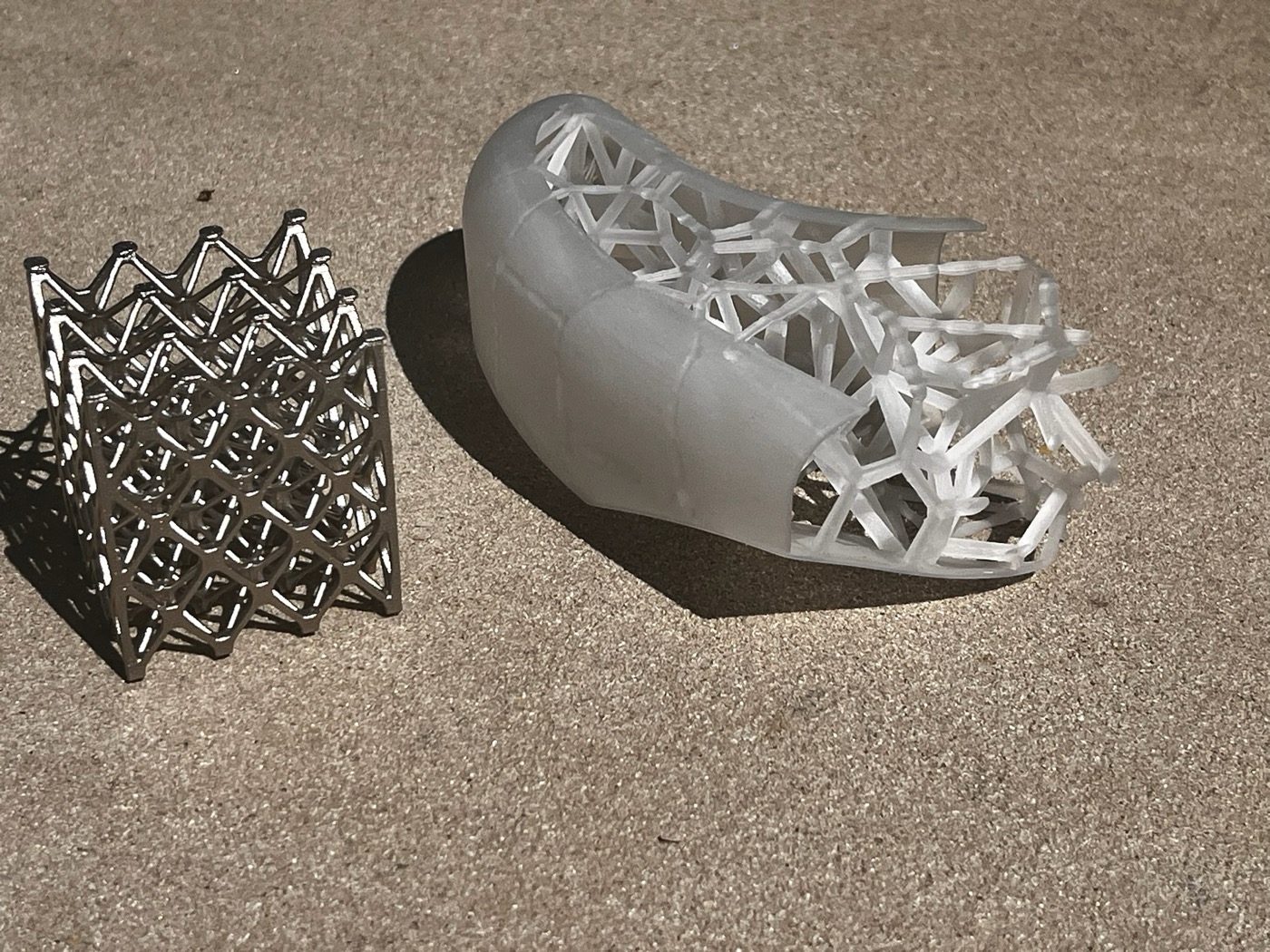
Before committing to a full-scale body, we printed a series of scaled test pieces on an SLA resin printer. The first samples were small lattice swatches and partial body sections — enough to validate that the Voronoi geometry would survive the printing process, that the cell walls held their integrity at scale, and that the open lattice would be visually legible at Stratocaster body dimensions.
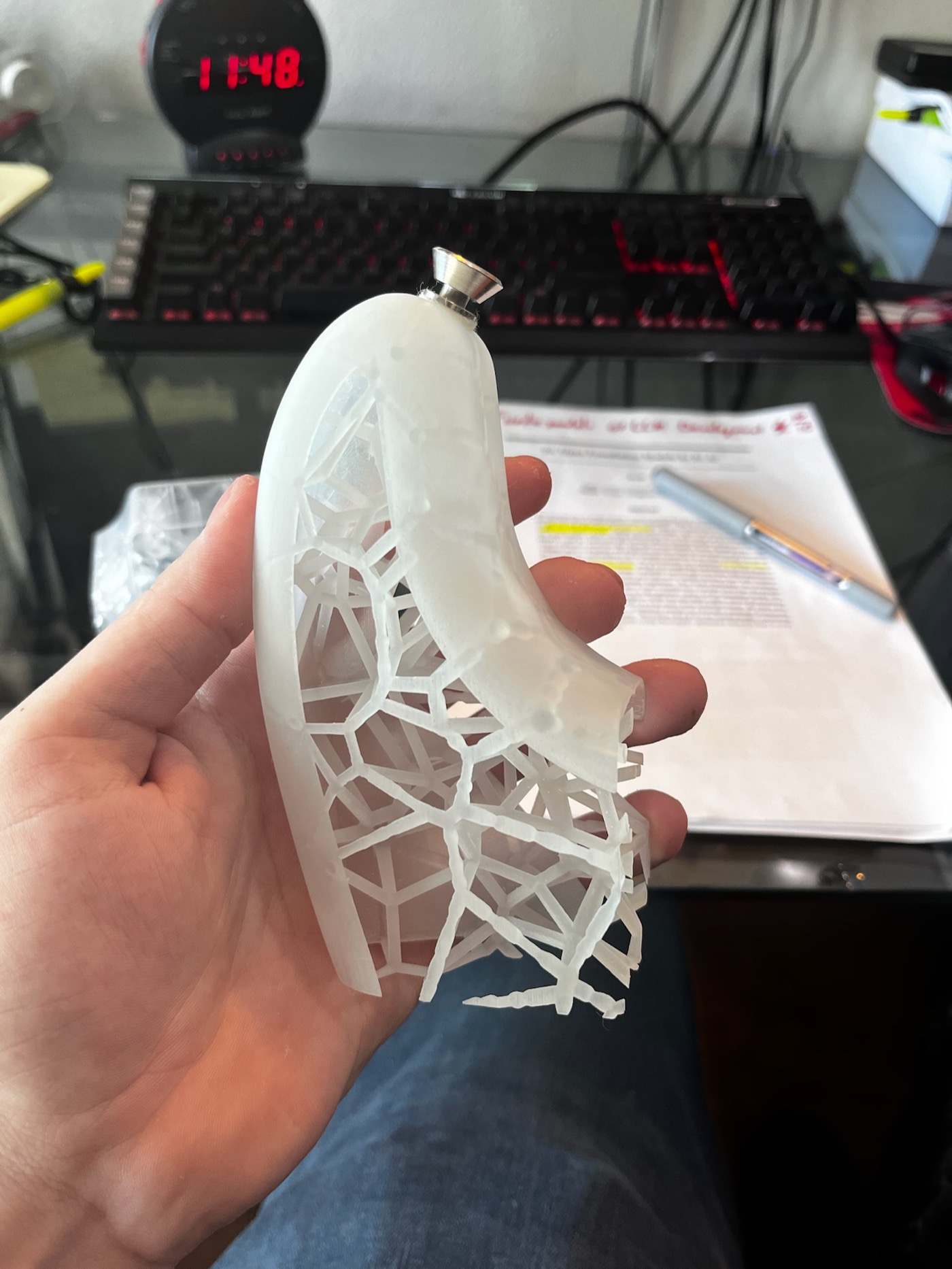
Full Resin Bodies
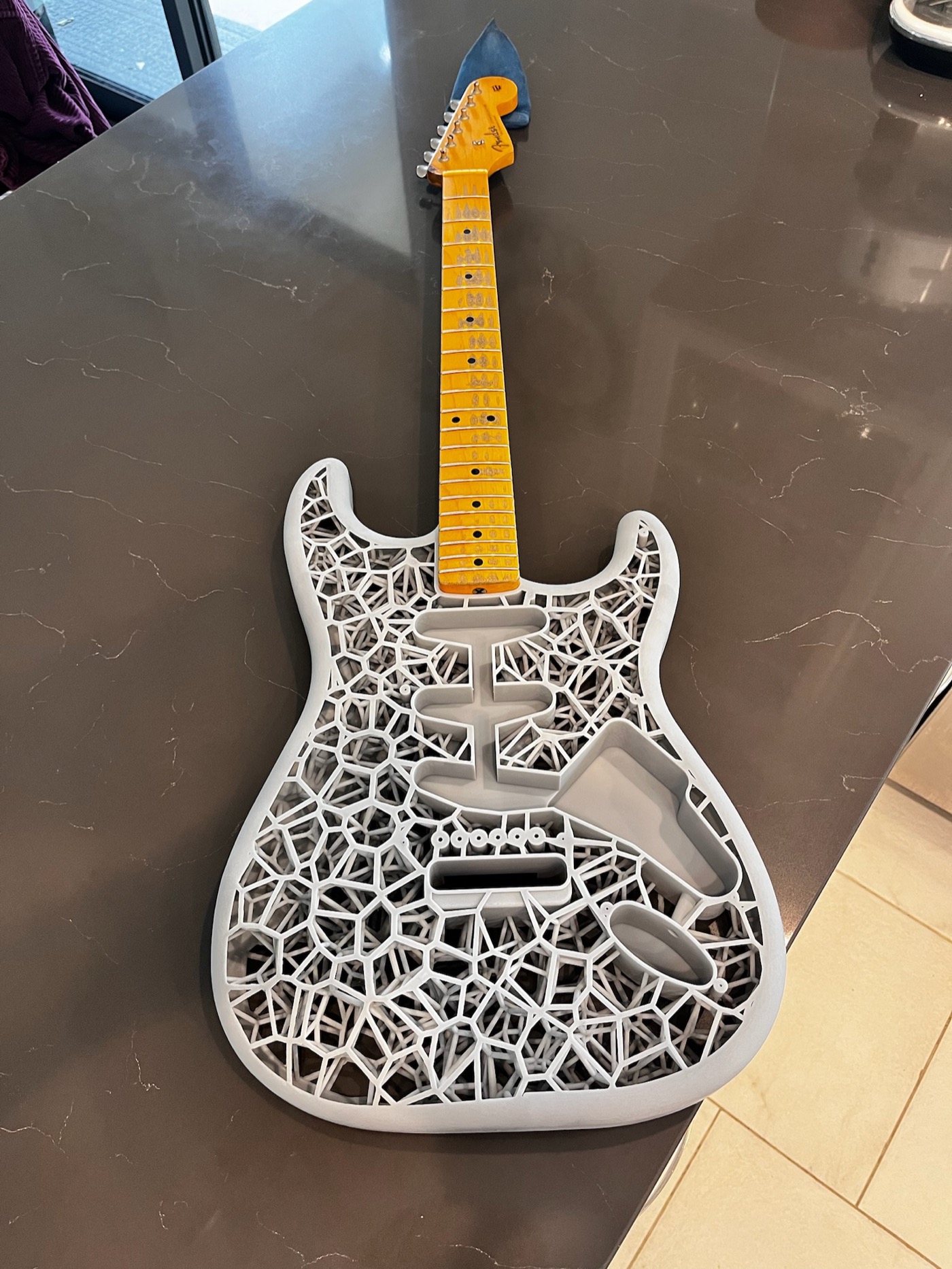
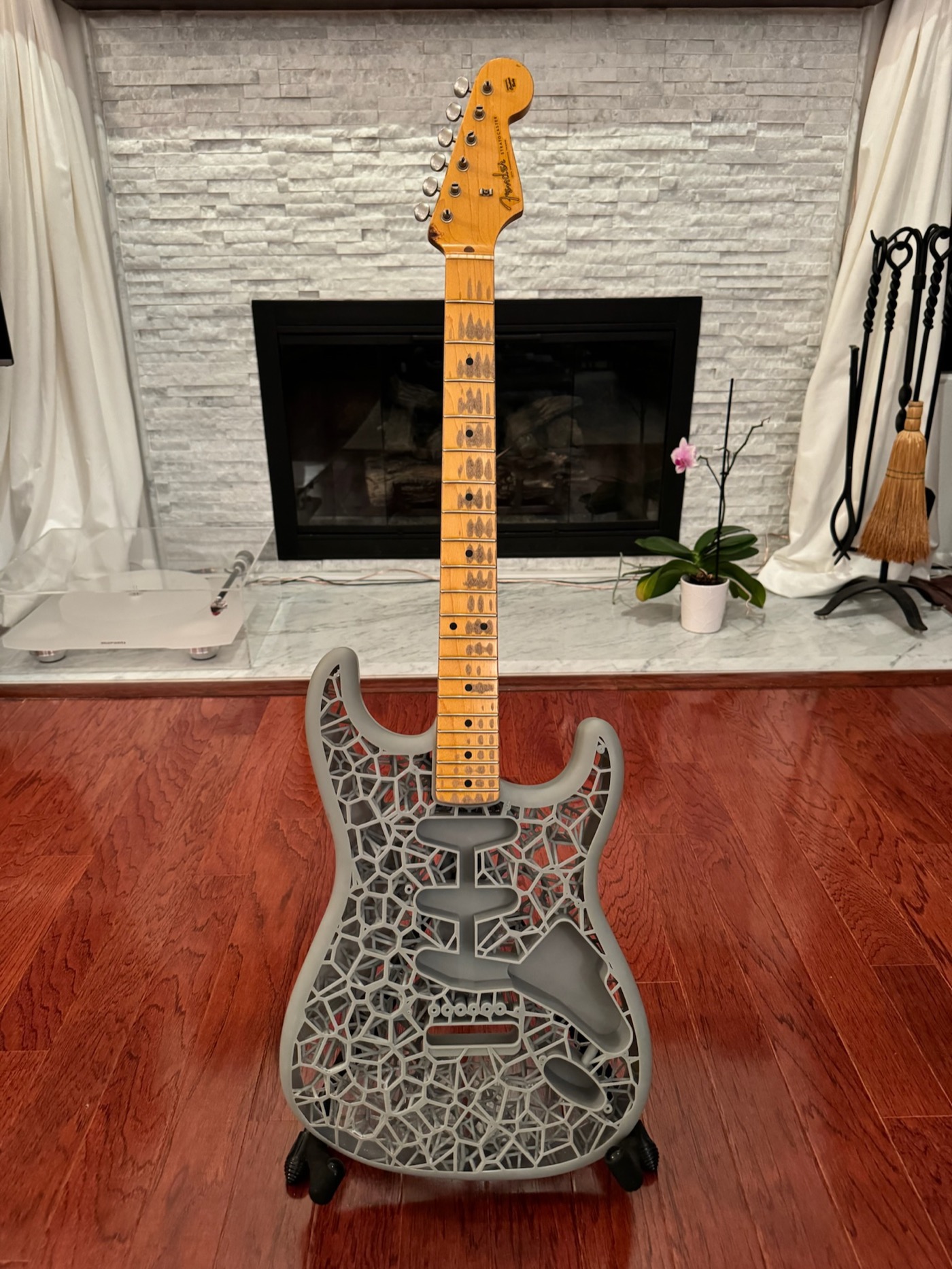
With the geometry validated at small scale, we moved to full-size prints. The complete Stratocaster bodies were printed in gray SLA resin — every cell wall, every mounting pocket, every contour rendered at full 1:1 scale. The bodies were light, rigid, and immediately impressive to hold. You could see through them. You could trace the Voronoi cells from the front to the back. The guitar shape was unmistakable, but the structure was entirely new.
To verify fitment, we test-fitted a Fender Eric Clapton Signature neck — maple, with the distinctive soft-V profile and vintage-style Kluson tuners. It bolted directly into the neck pocket with no modification. The geometry was exact.
Repliform: Electroplating
A resin body is a proof of concept. A metal body is a guitar. To transform the printed resin into a fully metallic instrument, we partnered with Repliform, a company specializing in electroforming and electroplating of complex 3D-printed geometries. Their process deposits real metal — atom by atom — onto the surface of the resin substrate, building up a continuous metallic shell that follows every contour of the Voronoi lattice.
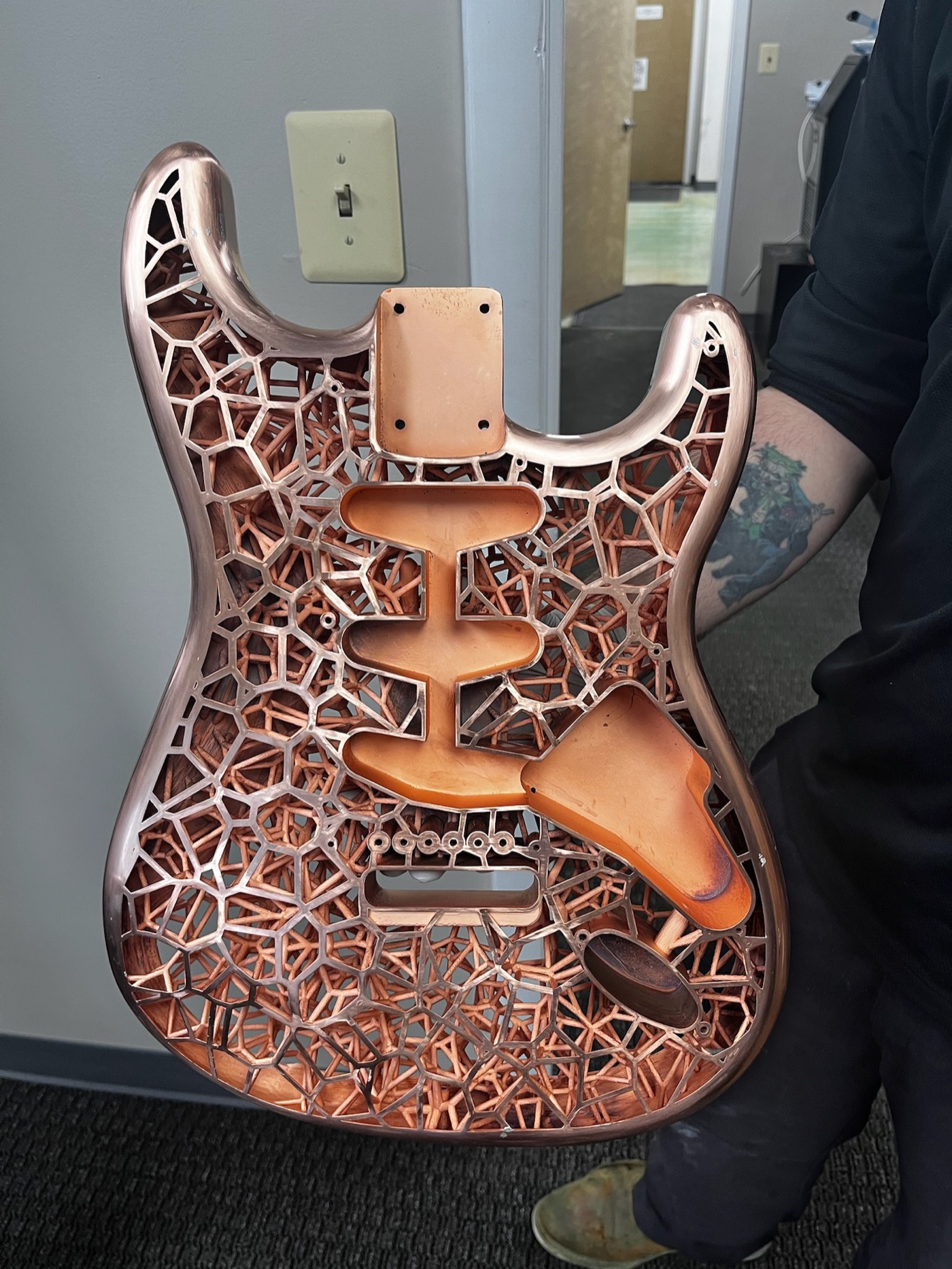
The first body was plated in copper. Repliform’s electroforming process starts with a conductive coating applied to the resin surface, followed by copper electrodeposition in a plating bath. The copper builds up uniformly across the entire lattice — every cell wall, every junction, every edge — producing a body that is structurally copper while retaining the resin core for dimensional stability.
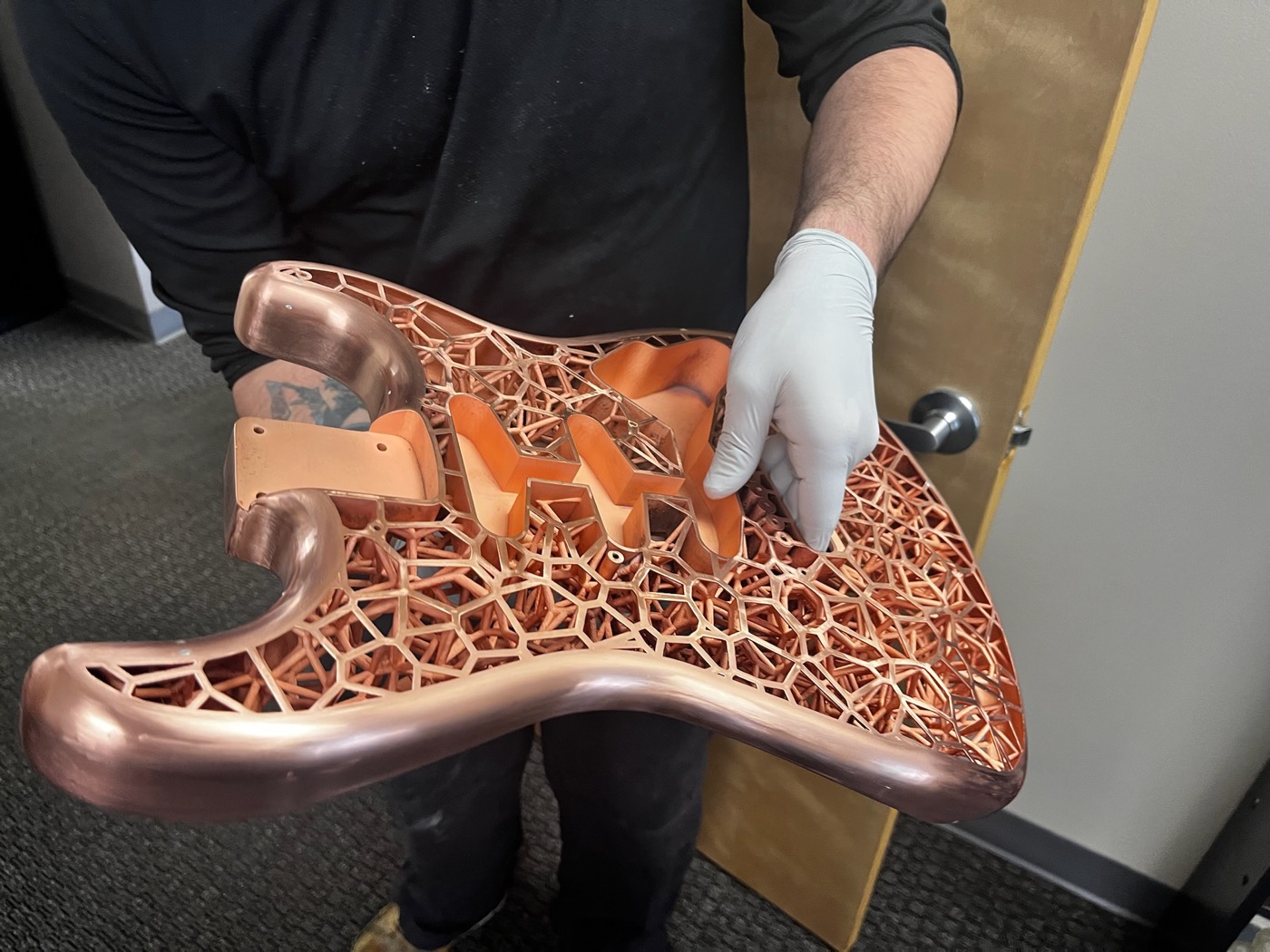
The second body was plated in nickel — a harder, more durable finish with the classic chrome-like appearance that would define the final instrument. The nickel electroplating process follows the same principle but produces a surface that is significantly harder than copper and resists tarnishing.
First Assembled Prototype
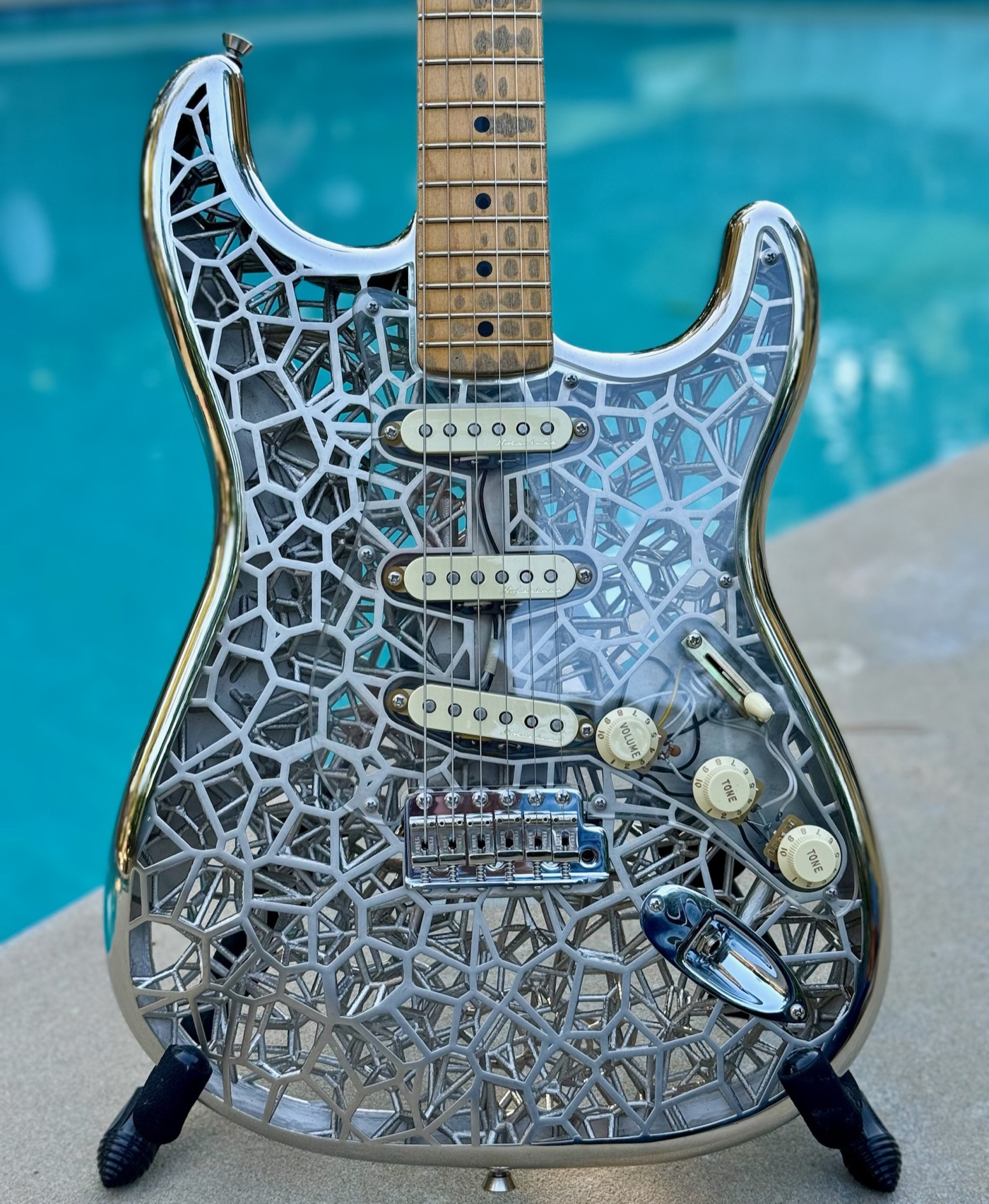
The nickel body was assembled into a fully playable instrument with the Fender Eric Clapton Signature neck, a set of Fender Custom Shop hand-wound pickups, vintage-style tremolo bridge, and standard Stratocaster electronics. The guitar weighs roughly the same as a standard Strat — the metal plating adds mass back that the lattice removed — and it plays like one. The neck pocket fit is tight, the intonation sets correctly, and the pickups produce the classic Stratocaster voice with an unusual midrange character that may be attributable to the open lattice body resonance.
Showing the Guitar
Before taking the NASAcaster public, we brought the assembled prototype to people whose opinions would matter most. The guitar was shown backstage to Joe Bonamassa — one of the premier blues guitarists in the world and a serious collector of vintage and custom instruments. Bonamassa picked it up, turned it over, held it to the light, and gave his approval. When a player of that caliber takes your instrument seriously, you know the concept works.
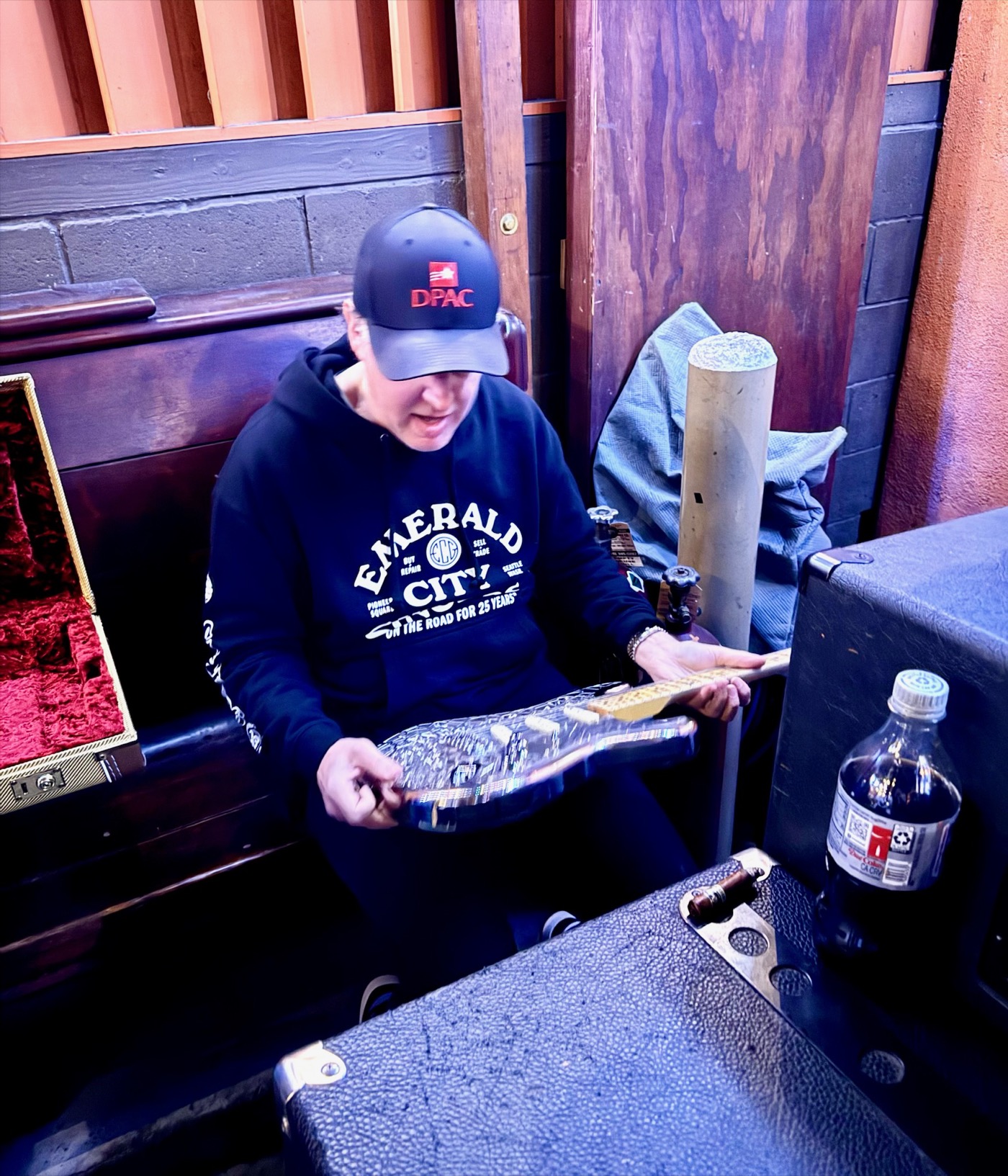
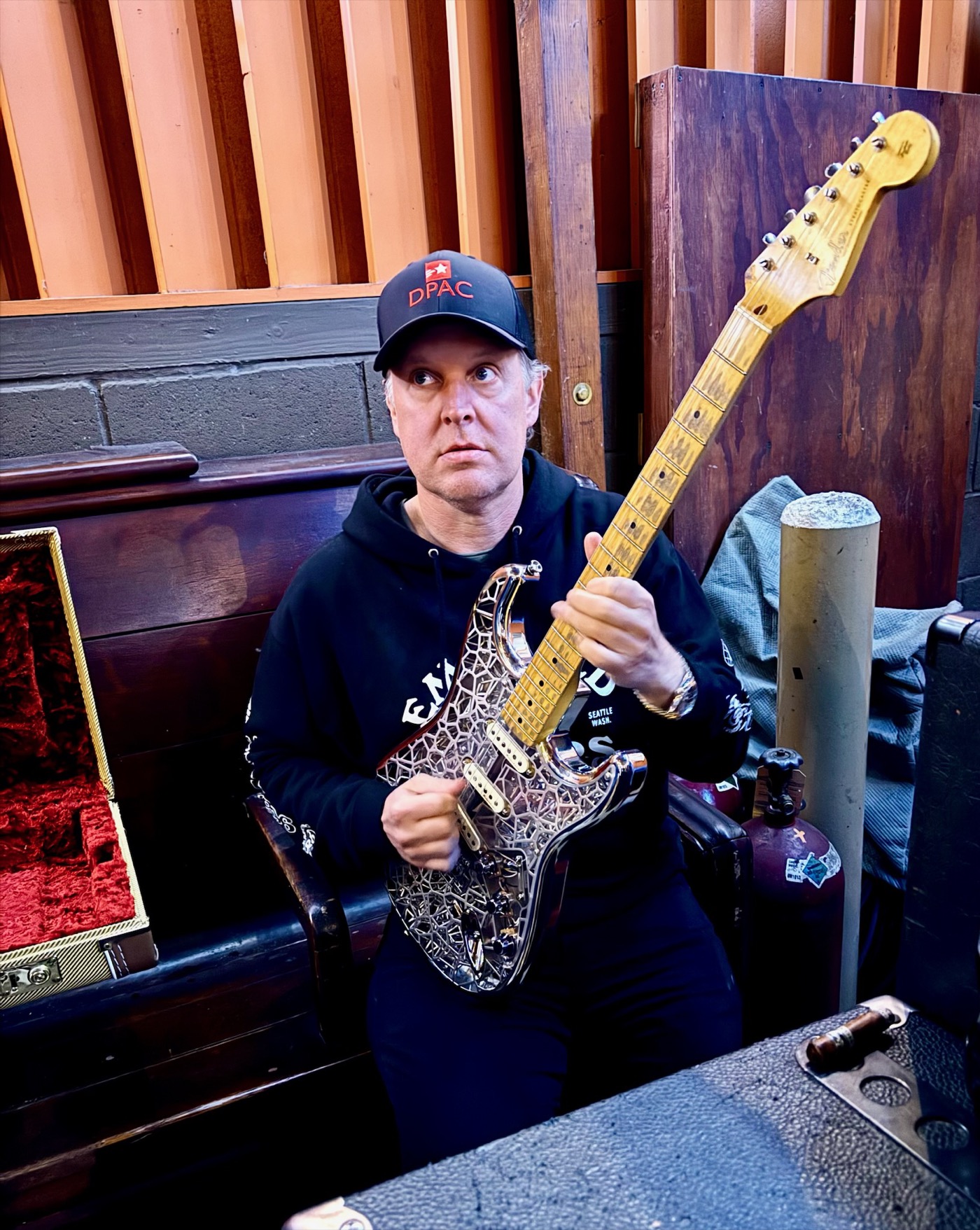
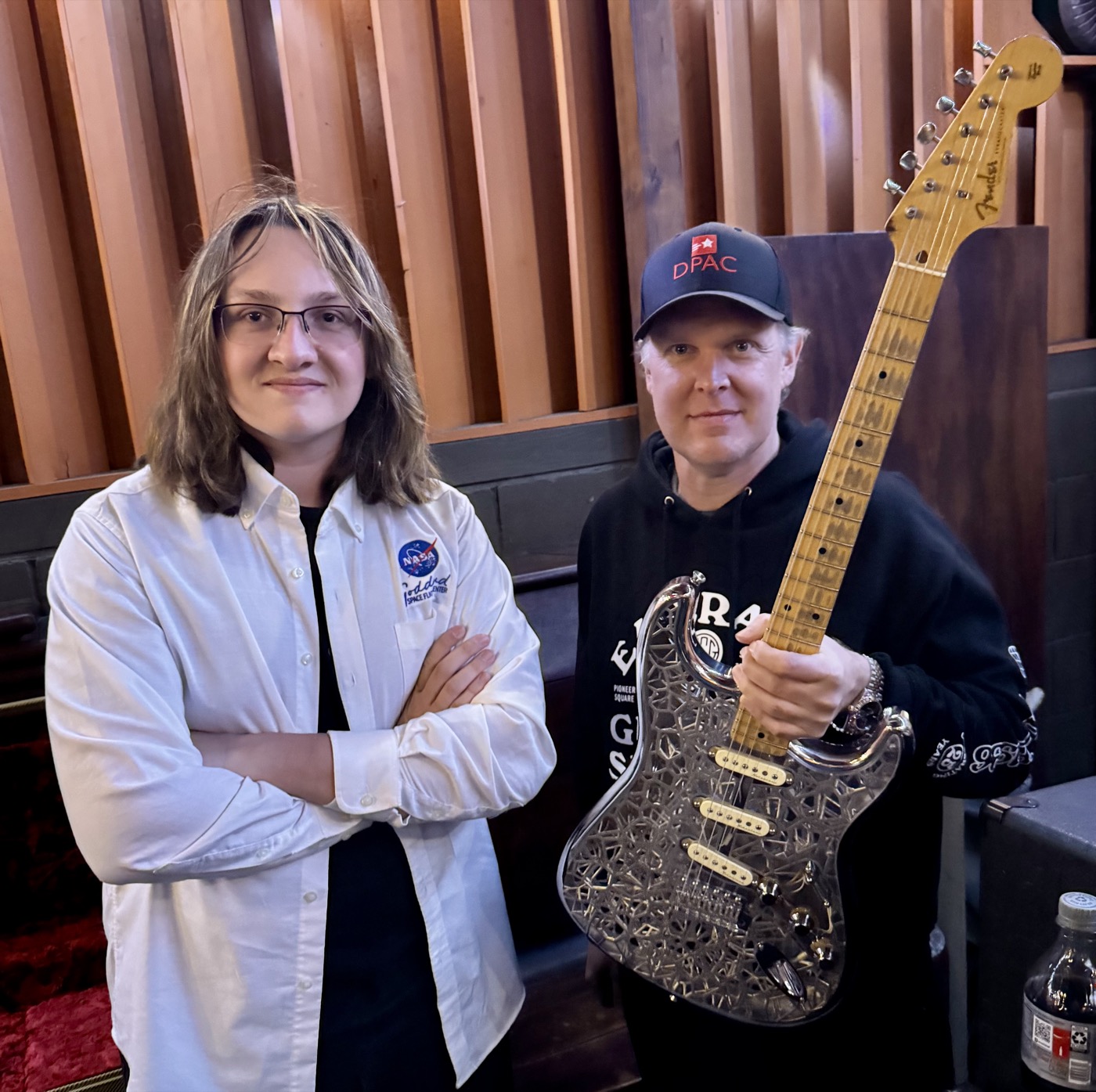
The guitar was also shown to key people at Fender, who recognized both the engineering achievement and the commercial potential of the concept. Their endorsement opened the door to what came next: a full Fender Custom Shop collaboration for NAMM.
NAMM 2025
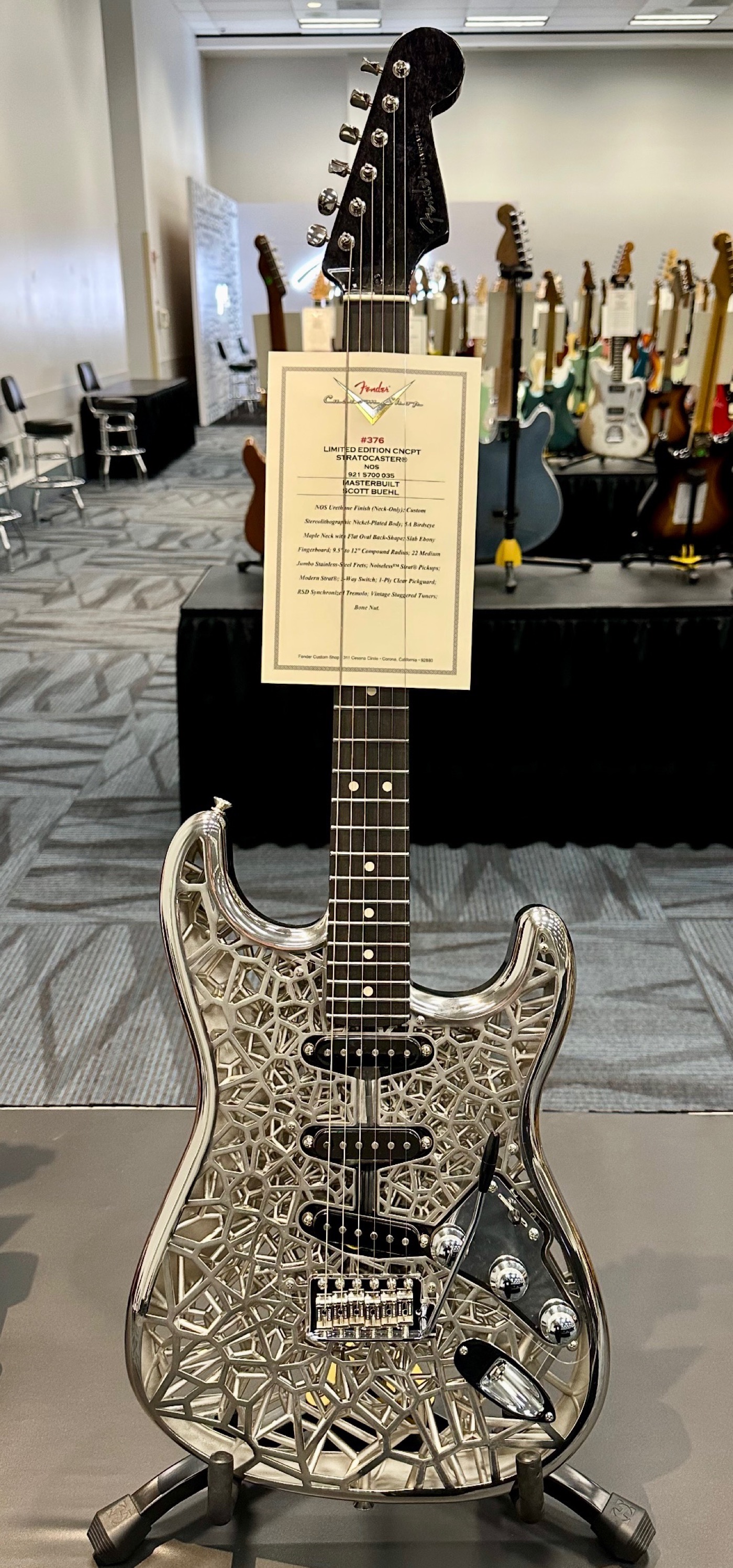
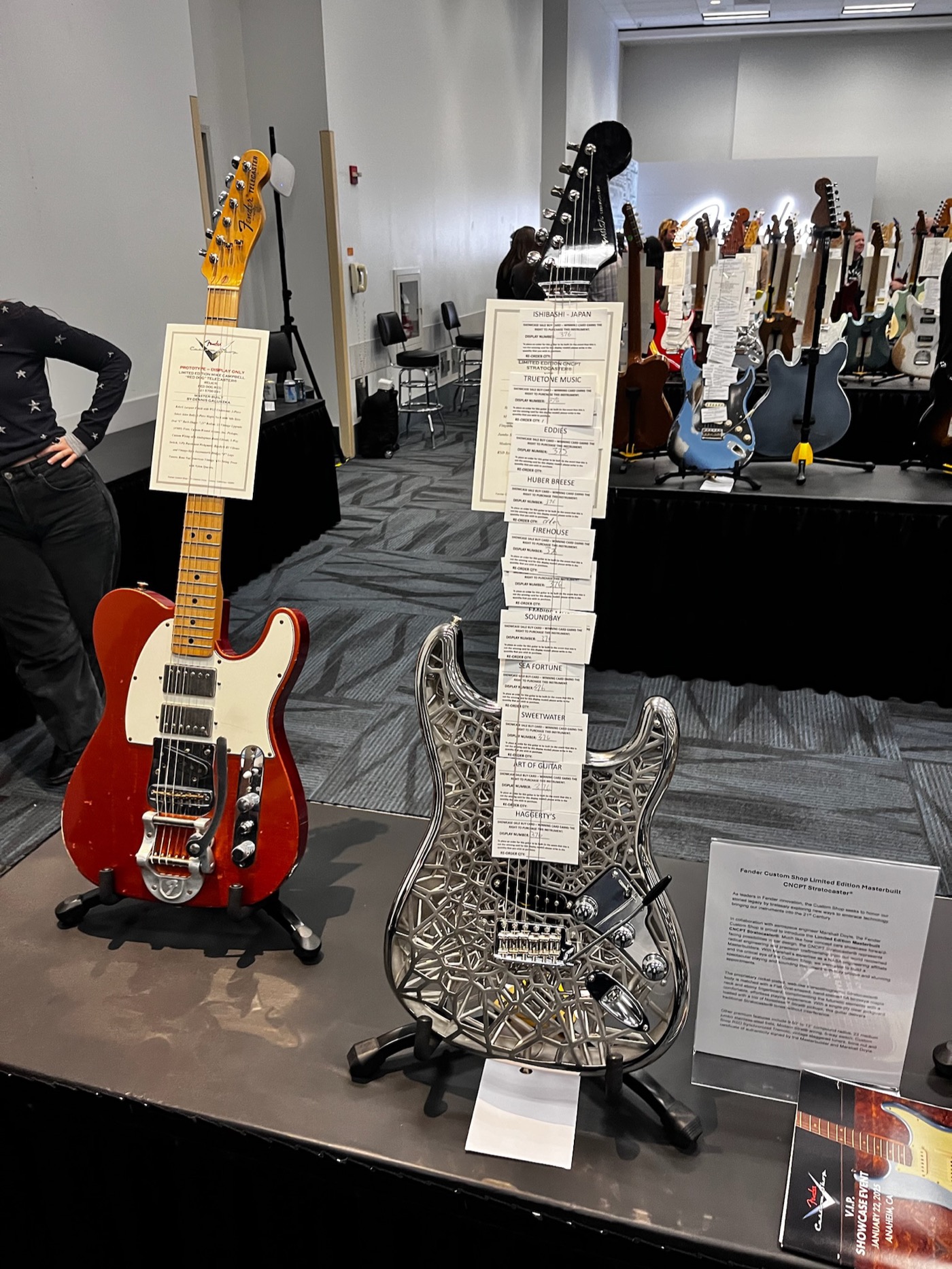
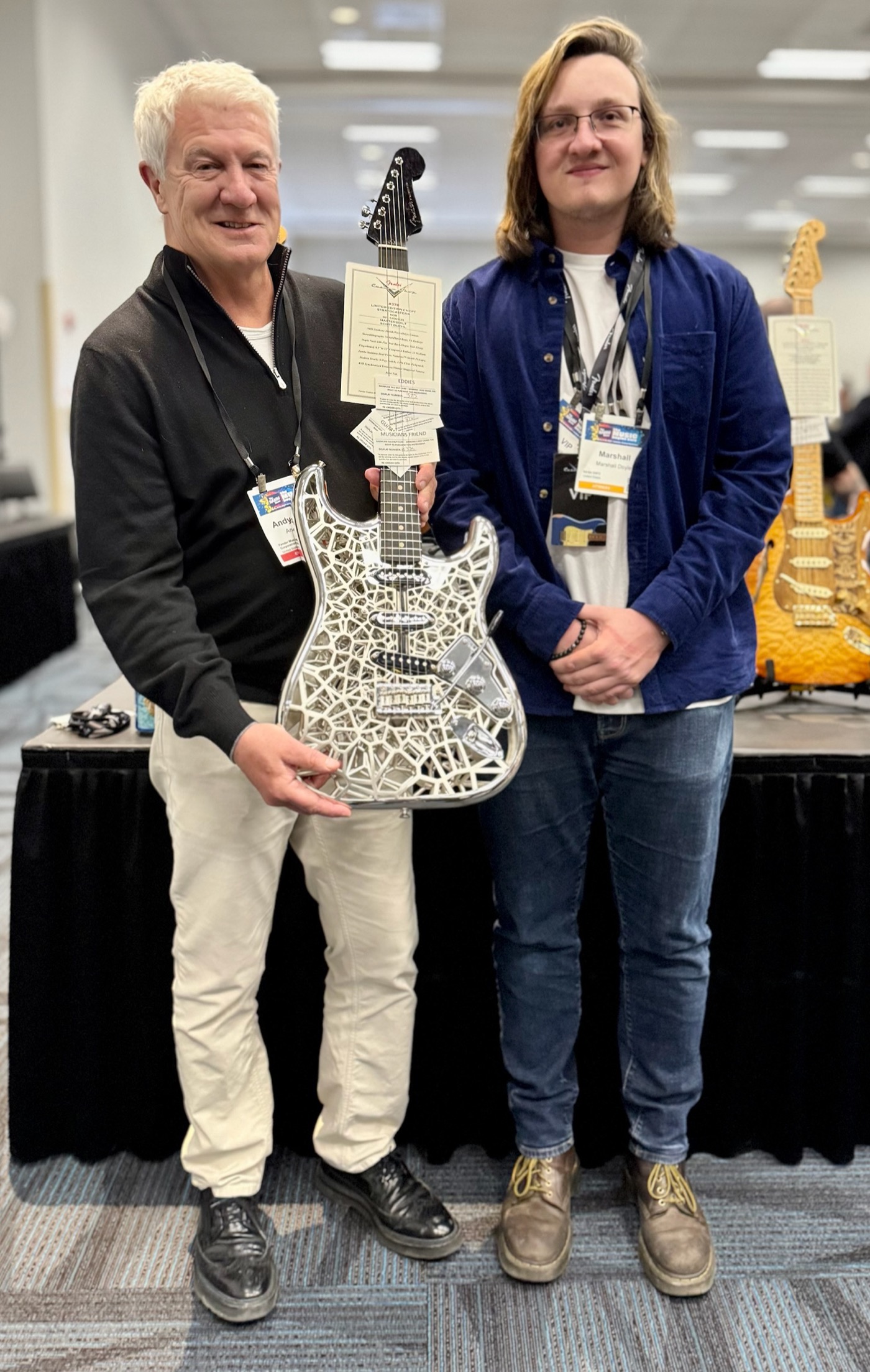
For the NAMM Show, we built a second NASAcaster — this time with full Fender Custom Shop assembly and a custom neck. Where the first prototype used an off-the-shelf Clapton neck, the NAMM guitar was built from scratch by the Custom Shop: a rosewood fingerboard, custom headstock in matching dark finish, premium hardware throughout, and the same nickel-plated Voronoi body geometry. The spec card at the booth read like something between a Fender Custom Shop order sheet and an aerospace engineering report.
Both guitars were displayed at NAMM — the original Clapton-neck prototype and the new Custom Shop build — alongside the loose second body, all presented in a Fender 70th anniversary case. The booth drew a crowd throughout the show.
Technical Summary
| Parameter | Detail |
|---|---|
| Body geometry | Voronoi tessellation, ~1.5–2mm cell walls |
| Design software | nTop (implicit modeling + lattice generation) |
| Printing process | SLA stereolithography (resin) |
| Metal finishing | Electroforming by Repliform (copper + nickel) |
| Prototype 1 neck | Fender Eric Clapton Signature (maple, soft-V) |
| Prototype 2 neck | Fender Custom Shop (rosewood, custom headstock) |
| Pickups | Fender Custom Shop hand-wound |
| Showcased | NAMM 2025, Fender Custom Shop booth |